

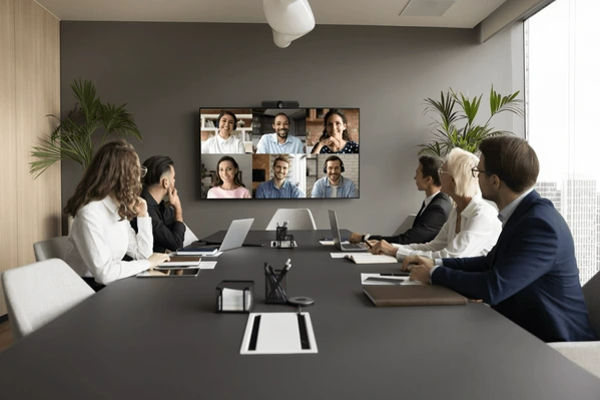
You Filled the Webinar Room. Then Everyone Disappeared. Here's What You're Missing.
You just hosted a webinar.
100 people registered.
40 showed up.
You delivered great content.
People seemed engaged.
The chat was active.
You made your offer at the end.
Two people bought.
Everyone else left.
And now what?
Do you know who attended and who didn't?
Do you have a follow-up plan for the people who registered but no-showed?
Do you have a nurture sequence for the attendees who didn't buy?
Do you know what to do with the replay?
If the answers are "not really," you just worked hard for a room full of people who will never hear from you again.
That's not a webinar strategy.
That's hope with a Zoom link.
The Three Gaps That Kill Webinar ROI
Most webinar hosts focus entirely on registration.
They run ads.
They promote on social media.
They email their list.
They get 100-300 registrations.
And then they stop thinking strategically.
Here are the three gaps where all the ROI leaks out:
Gap 1: Registration to Attendance
Average registration-to-attendance rate for webinars: 30-40%.
That means if 100 people register, only 30-40 show up.
You just lost 60-70 potential customers.
Not because they weren't interested.
Because they forgot, got busy, or didn't get reminded enough.
Gap 2: Attendance to Engagement
Of the people who attend, how many are actually engaged?
How many are multitasking?
How many leave halfway through?
How many stay until you make the offer?
Without engagement, attendance doesn't matter.
Gap 3: Attendance to Conversion
Of the people who attend and engage, how many convert?
Typical webinar conversion rates: 2-5% of attendees.
So if 40 people attended, you're converting 1-2 people.
What happens to the other 38?
Most webinar hosts never contact them again.
That's the biggest leak.
The Registration-to-Attendance Problem
Here's what most webinar hosts do:
Someone registers.
They get a confirmation email (maybe).
Nothing else happens until the day of the webinar.
Day-of: They get a reminder email with the Zoom link.
They're busy.
They forget.
They don't show up.
Here's what should happen:
Immediately after registration:
Confirmation email with webinar details.
Calendar invite so it's on their schedule.
What to expect (topic, length, what they'll learn).
Day before webinar:
Reminder email: "Looking forward to seeing you tomorrow at [time]. Here's what we're covering: [preview]"
3 hours before webinar:
Reminder email: "We're going live in 3 hours! Here's your link: [Zoom URL]"
30 minutes before webinar:
Final reminder email or SMS: "Starting in 30 minutes. Join here: [link]"
That's four touchpoints between registration and the event.
Not one.
Four.
And your attendance rate goes from 30% to 50-60%.
The Engagement Problem
Let's say they show up.
Now what?
Are you just talking at them for 45 minutes?
Or are you engaging them?
Here's what engagement looks like:
During the webinar:
Ask questions in the chat.
Run polls.
Have them type responses.
Share their wins or challenges.
Make it interactive, not a lecture.
Why this matters:
Engaged attendees stay until the end.
Engaged attendees are more likely to buy.
Engaged attendees remember you after the event ends.
Passive attendees multitask, leave early, and forget you existed.
The Offer Delivery Problem
Here's where most webinar hosts screw up the conversion:
They teach for 45 minutes.
Then they pitch for 15 minutes.
And the pitch feels disconnected from the teaching.
Here's what works better:
Teach with the offer in mind.
Your content should naturally lead to the realization: "I need help with this."
Your offer should be the logical next step.
Not a hard pivot.
Example:
Bad: "That's the framework. Now let me tell you about my $2,000 coaching program."
Good: "That's the framework. Implementing it on your own takes 3-6 months and you'll hit roadblocks. In my program, we do it together in 90 days with support at every step. Here's how it works..."
The offer is the continuation of the value you just delivered.
Not a sales pitch bolted onto the end.
The Post-Webinar Follow-Up That Nobody Does
Here's the biggest opportunity:
What happens after the webinar ends?
Most hosts:
Send a replay link (maybe).
Send one follow-up email about the offer (maybe).
Then nothing.
The 38 people who attended but didn't buy disappear.
The 60 people who registered but didn't attend disappear.
And you just gave away your best content to 100 people and converted 2.
Here's what should happen:
Immediately after the webinar:
Thank you email to attendees with replay link.
Email to no-shows: "Sorry you couldn't make it. Here's the replay: [link]"
Day 1 post-webinar:
Attendees: "Here are the resources I mentioned on the webinar: [links]. If you're ready to move forward with [offer], here's the link: [sales page]"
No-shows: "Did you get a chance to watch the replay? Here's the link again: [link]"
Day 3 post-webinar:
Attendees who didn't buy: "I wanted to address a few questions that came up on the webinar: [FAQ or objection handling]. If you're considering [offer], I'm happy to jump on a call to discuss: [booking link]"
No-shows who watched replay: Same email as above.
No-shows who didn't watch replay: "Last chance to catch the replay before I take it down: [link]"
Day 7 post-webinar:
Everyone: "The webinar replay is coming down tonight. If you haven't watched it yet: [link]. If you have questions about [offer], reply to this email or book a call: [link]"
Day 14 post-webinar:
Everyone who engaged but didn't buy: Add to long-term nurture sequence. They're warm leads. Keep them on your email list. Nurture them toward future offers.
That's five post-webinar touchpoints.
Most hosts do zero or one.
The Replay Strategy
Let's talk about replays.
Most hosts make them available forever.
That kills urgency.
Here's what works better:
Replay available for 5-7 days.
Communicate this clearly during the webinar and in follow-up emails.
Creates urgency for people to watch.
Creates urgency for people to buy (if the offer expires with the replay).
After replay expires:
Offer is still available (if it's an ongoing program).
But special webinar pricing or bonuses expire.
This balances urgency with not penalizing people who needed more time.
The Recurring Webinar Model
Here's an advanced strategy:
Instead of one-off webinars, run the same webinar on a recurring schedule.
Weekly or bi-weekly.
Same content.
Same offer.
Automated.
Why this works:
You perfect the content over time.
You can run ads continuously (not just for one event).
People can register for the next available slot (instead of waiting for your next launch).
It becomes a predictable lead generation machine.
But only if you have the before/during/after process built.
The Webinar Funnel Math
Let's talk about what good webinar ROI looks like:
Registration: 200 people
Attendance rate: 50% = 100 attendees
Conversion rate: 5% = 5 buyers
Offer price: $2,000
Revenue: $10,000
Costs:
Ads: $1,000
Platform: $100
Time: 10 hours (content creation, promotion, delivery, follow-up)
Net: $8,900
But that's only if you:
Get 50% to show up (requires pre-event reminder sequence).
Convert 5% (requires good content, good offer, good delivery).
Follow up properly (requires post-event sequence).
Without those systems, your numbers look like:
Attendance rate: 30% = 60 attendees
Conversion rate: 2% = 1 buyer
Revenue: $2,000
Net: $900
Same webinar.
Different process.
10x difference in ROI.
The Evergreen Webinar Option
Here's another model:
Pre-record your webinar.
Make it available on-demand or on scheduled times.
Automate the entire sequence (registration, reminders, follow-up).
Why this works:
You deliver it once, it works forever.
It runs 24/7 without your time.
You can test and optimize continuously.
It scales without you.
But you need:
High-quality recording.
Automated email sequences.
Automated offer delivery.
Automated follow-up for buyers and non-buyers.
This is advanced, but it turns a webinar into a passive lead generation asset.
The Webinar-to-Call Strategy
Not every offer should be sold directly on a webinar.
For high-ticket offers ($5,000+), a better model:
Use the webinar to generate booked calls.
Deliver value on the webinar.
At the end: "If you want help implementing this, let's talk. Book a call here: [link]"
Follow up after the webinar with the same CTA.
The webinar pre-qualifies and warms up leads.
The call closes the deal.
This works especially well for coaching, consulting, and done-for-you services.
The Real Question
Are you hosting webinars or are you running a webinar conversion system?
Because hosting a webinar is easy.
Getting people to show up, engage, buy, and stay connected requires a system.
And that's the difference between a $2,000 webinar and a $10,000 webinar.
Action Steps:
Calculate your current webinar metrics: registration-to-attendance rate, conversion rate, revenue per webinar.
Identify which gap is costing you the most (registration to attendance? attendance to conversion? post-event follow-up?).
Map out the before/during/after process that should exist.
Decide if you want to build it yourself (DIY) or have us build it with you (DWY).
Ready to stop losing leads after every webinar?
Our Highlevel Snapshot is Available for Webinar Hosts that want to Take Full Advantage of the SYSTEM.
Learn More Here